
Showing all 5 results
Building Domestic Violence Health Care Responses in Indian Country: A Promising Practices Report (PDF only)
$0.00
Funded by the Indian Health Service and Administration for Children and Families, the IHS/ACF Domestic Violence Project (2002-2009), trained thousands of health care providers and community advocates, identified and empowered national experts, instituted sustainable DV response programs in hospitals and clinics, developed model policies and tools to better address abuse
Reflections from the Field: DV Specialized Positions (PDF only)
$0.00
In 2006, specialists, advocates, CPS, and domestic violence program administrators, and representatives from national organizations convened for Exploring the Role of Specialized Positions in Child Welfare and Domestic Violence Collaborations (Specialized Positions Meeting). This document is a reflection of the discussions that occurred at that meeting and literature reviews that
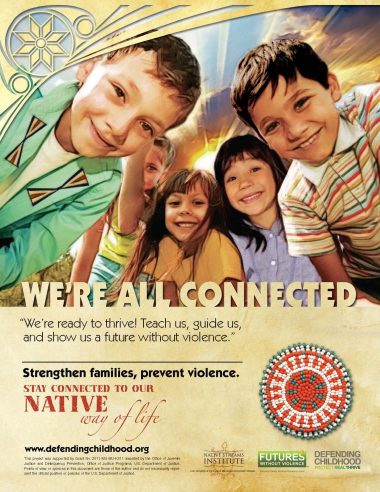
Strengthen Families, Prevent Violence Posters (Hard Copy and PDF)
$0.00
Strengthen Families, Prevent Violence is a campaign for Indian Country and was designed to educate and engage families on concrete action steps that they can take to promote resiliency and healing for children. The campaign was funded by the Office of Juvenile Justice and Delinquency Prevention (DOJ) and developed by
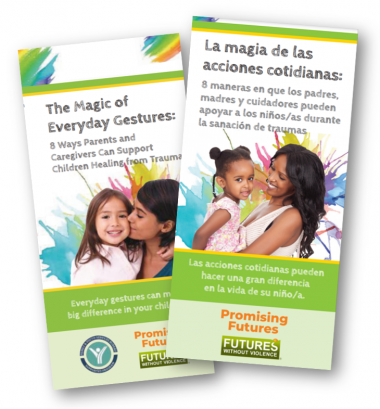
The Magic of Everyday Gestures: 8 Ways Parents and Caregivers Can Support Children Healing from Trauma (Hardcopy and PDF Only)
$0.00
This brochure is intended to help parents, families and advocates connect with children who have experienced violence and support their healing using 8 simple actions. Created by Promising Futures.
The PDF download link includes both the English and Spanish versions of the brochure.
Un-Heard Voices: Domestic Violence in the Asian American Community (PDF only)
$0.00
(Un) Heard Voices is based on the results of a focus group with Asian immigrant women and Asian American women from different backgrounds. The report includes major recommendations to service providers and the Appendix Section includes national listing of organizations devoted to Asian battered women.
This publication is available as a